
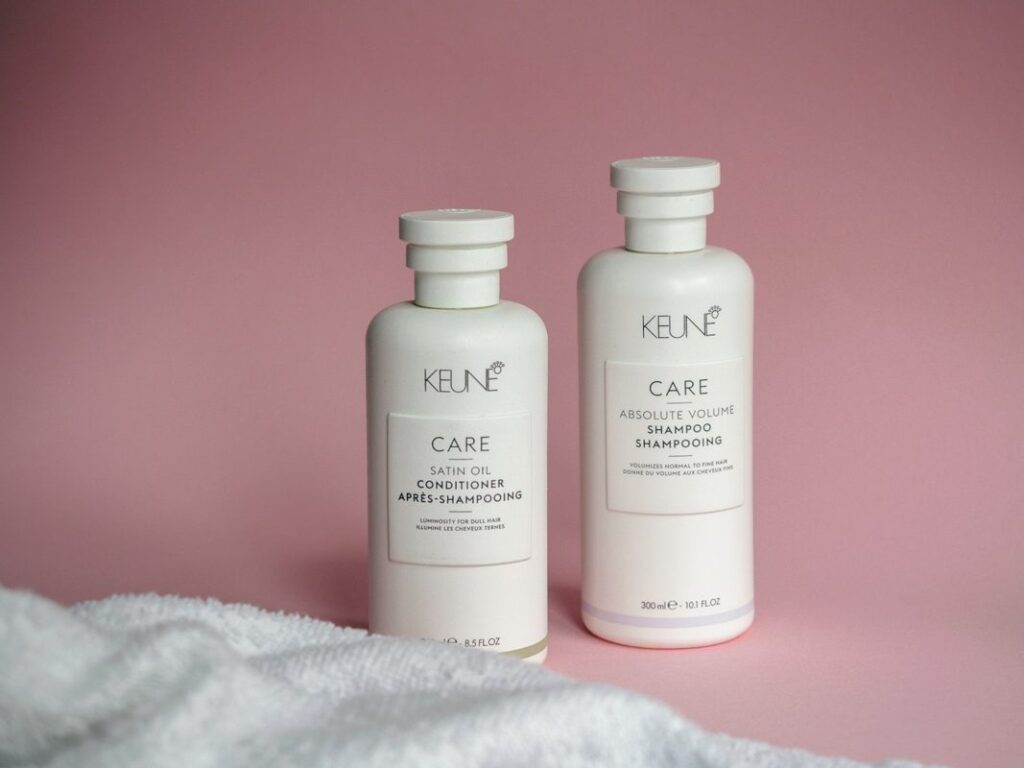
Editor’s note (updated October 2026): we have expanded this early post with how conditioner works, how to choose one, and a correction to one piece of our original advice.
The shampoo gets all the press. The conditioner does most of the work.
Conditioner is what undoes the day’s wear and keeps tomorrow’s hair brushable. The right one can turn a tired hair day around; the wrong one can flatten even the best blowout. Here is how to use it properly and how to choose one.
What conditioner actually does
Shampoo cleans by lifting away oil and dirt, and in the process it can leave the hair’s outer layer, the cuticle, rough and slightly raised, with a negative charge that causes static and tangles. Conditioners use positively charged conditioning agents, fatty alcohols, oils and silicones to smooth the cuticle, cut friction between strands and add slip. The result is hair that detangles more easily, breaks less when you brush it and reflects more light.
How to use it
- Lengths and ends, not the scalp. The ends are the oldest, most worn part of your hair and need it most. Conditioner on the scalp mostly weighs down the roots, unless your hair is very dry or coily.
- Squeeze out excess water first. Conditioner spreads further and works better on hair that is damp rather than dripping.
- Detangle while it is in. Comb through with your fingers or a wide-tooth comb. The slip is what untangles, not the product itself.
- Give it two or three minutes. Longer if you have time; a deep conditioner or mask needs five to ten.
- Rinse well. Leftover conditioner is the most common cause of limp, greasy-looking hair. Many people like to finish with a cooler rinse.
How to pick one
- Fine or oily hair: a lightweight, volumizing conditioner, used only from the ears down.
- Thick, dry or curly hair: a richer, moisturizing formula, plus a weekly mask.
- Color-treated hair: a color-safe conditioner, ideally paired with a sulfate-free shampoo.
- Damaged or bleached hair: a strengthening or bond-building conditioner, used alongside a weekly treatment.
Switch it up, for the right reasons
We used to say that hair gets used to a conditioner and that you should rotate formulas to keep it responsive. The better explanation is simpler: hair does not build a tolerance, but its needs change. Rich conditioners can build up over time, the seasons change, and a new color or cut changes what your hair wants. Keeping two conditioners on hand, a lighter one for every day and a richer one for when your ends feel dry, covers most of that. If your hair starts to feel coated, a clarifying wash every few weeks resets it.
Leave-in, rinse-out or mask?
Rinse-out conditioner is the everyday step. A leave-in conditioner is a light layer you leave in after washing, useful for frizz, curls and detangling between washes. A hair mask or deep conditioner is a concentrated treatment for once a week or so. Most people need the first; dry, curly or damaged hair benefits from all three.
The verdict
Conditioner is the simplest hair upgrade most people skip or rush. Put it on the ends, give it a couple of minutes, rinse it out properly, and choose it for your hair type rather than to match your shampoo.
Frequently asked questions
Should you put conditioner on your scalp?
Usually not. Apply it from the mid-lengths to the ends, where hair is oldest and driest. People with very dry or coily hair may benefit from bringing it a little closer to the roots.
How long should you leave conditioner in?
Two to three minutes for a regular rinse-out conditioner, longer if you have time. Deep conditioners and hair masks typically need five to ten minutes.
Does hair get used to conditioner?
Not in the sense of building a tolerance. What usually happens is buildup from rich formulas, or a change in what your hair needs because of the weather, color or damage. A clarifying wash every few weeks and a lighter backup conditioner solve most of it.
What is the difference between conditioner and a hair mask?
A conditioner is a quick everyday step that smooths and detangles. A hair mask is a richer, more concentrated treatment that you leave on longer, usually about once a week.