
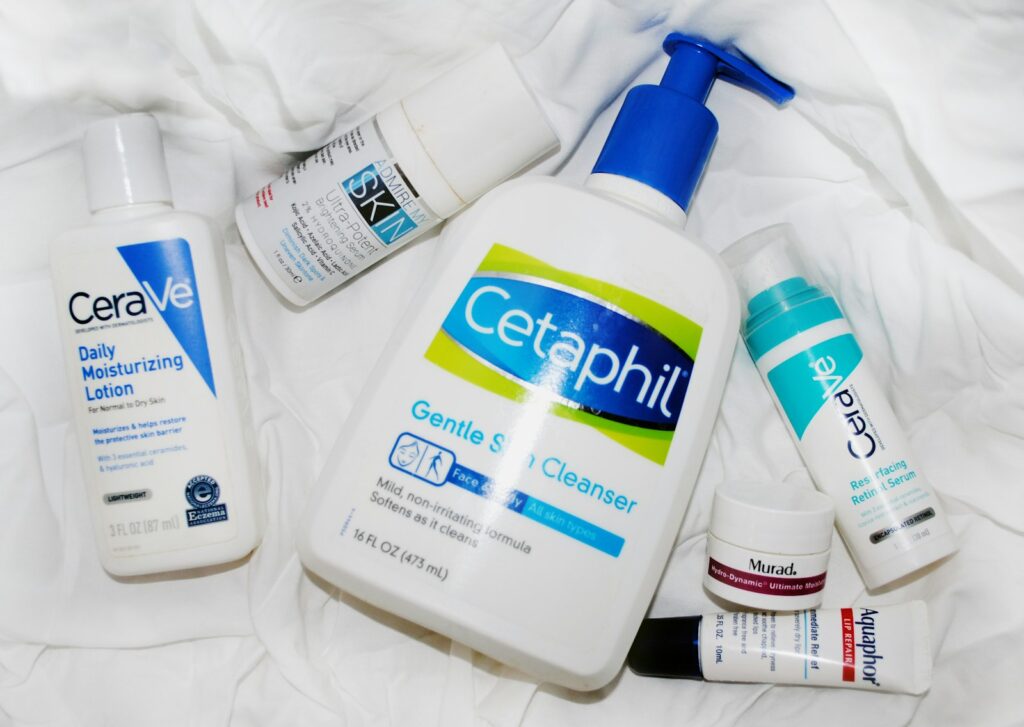
Quick answer: Skin cycling is a four-night rotation: night one is a chemical exfoliant, night two is a retinoid, and nights three and four are recovery nights with only cleanser and moisturizer, then the cycle repeats. The idea, popularized by New York dermatologist Dr. Whitney Bowe, is to get the benefits of both actives while giving skin time to recover so it is less likely to get irritated. It is a sensible, flexible schedule, especially for beginners and sensitive skin, but it has not been tested as a named routine in published clinical trials, and people who already tolerate a nightly retinoid have no need to cut back.
This guide is for people who want to use a retinoid and an exfoliating acid without the redness and peeling that often come from using both too often, and for anyone curious whether the trend is worth following. It covers how the four nights work, what to use each night, how to adjust the schedule for your skin, and when to skip it. This guide is general information, not medical advice; see a board-certified dermatologist for persistent or severe skin concerns, and before combining actives with prescription treatments.
What is skin cycling?
Skin cycling is an evening routine that alternates active ingredients with rest nights instead of using everything every night. According to a medically reviewed explainer from Curology, the term was coined by board-certified dermatologist Dr. Whitney Bowe, and every night starts with a cleanser and ends with a moisturizer.
The logic draws on standard dermatology advice. Both exfoliating acids and retinoids can cause dryness and irritation, and the American Academy of Dermatology (AAD) cautions that exfoliating alongside retinoids can worsen dryness or trigger breakouts. Separating them onto different nights, with recovery nights in between, is one structured way to follow that advice.
The four nights, step by step
| Night | Focus | What to use |
|---|---|---|
| 1 | Exfoliation | Gentle cleanser, chemical exfoliant (AHA, BHA or PHA), moisturizer |
| 2 | Retinoid | Gentle cleanser, pea-sized amount of retinoid on dry skin, moisturizer |
| 3 | Recovery | Gentle cleanser, optional hydrating serum, rich moisturizer |
| 4 | Recovery | Same as night three, then start again at night one |
Night 1: exfoliation
- Cleanse with a gentle, non-foaming or low-foaming cleanser and pat skin dry.
- Apply a leave-on chemical exfoliant. Lactic or glycolic acid suit texture and dullness; salicylic acid suits oily, breakout-prone skin; a PHA suits sensitive skin. Our guide to niacinamide for oily skin covers pairing options for pores.
- Follow with moisturizer.
Skip scrubs on this night. A leave-on acid is easier to control than a physical scrub, and the AAD notes that mechanical exfoliation may be too irritating for dry, sensitive or acne-prone skin.
Night 2: retinoid
- Cleanse and let skin dry fully. Cleveland Clinic suggests waiting about 30 minutes after washing before applying retinol.
- Apply a pea-sized amount to the whole face, avoiding the eyes, nostrils and mouth corners.
- Follow with moisturizer. If you are new to retinoids or have sensitive skin, a thin layer of moisturizer under the retinoid as well can make it easier to tolerate.
Retinol is the most common over-the-counter option. Adapalene is also available without a prescription and is often used for acne, while tretinoin and tazarotene require one, as the AAD explains in its guide to retinoids and retinol.
Nights 3 and 4: recovery
Recovery nights skip all actives. Cleanse, then apply a hydrating serum if you like and a moisturizer with barrier-supporting ingredients such as ceramides, glycerin or hyaluronic acid. Our guides to ceramide moisturizers and hyaluronic acid serums cover what to look for. Keep these nights simple; adding new products here defeats the purpose.
Does skin cycling work? What the evidence says
The parts of skin cycling are well supported; the specific schedule is not. We could not find a published clinical trial testing skin cycling as a named routine against other schedules. What we do have:
- Gradual retinoid use reduces irritation. The AAD recommends starting a retinoid every other night and building up slowly, and Cleveland Clinic suggests an every-other-day schedule for the first couple of weeks. Skin cycling’s single retinoid night per four-night cycle is more conservative than that.
- Exfoliation and retinoids together raise irritation risk. The AAD and Cleveland Clinic both advise caution when combining them, and Cleveland Clinic suggests alternating days with glycolic acid.
- Moisturizer reduces irritation. The AAD recommends it specifically to make retinoids easier to tolerate.
Even the Curology explainer, which is broadly positive, notes that the routine is not guaranteed to work and that it may leave too many nights off a retinoid for people whose skin can handle more. Our reading: skin cycling is a reasonable starting framework, not a proven formula.
How to adjust skin cycling for your skin
- Sensitive or dry skin: add a third recovery night (a five-night cycle), use a PHA or lactic acid on exfoliation night, or replace the exfoliation night with a second recovery night.
- Oily or acne-prone skin: salicylic acid on exfoliation night, and consider adapalene on retinoid night. Once your skin adjusts, many people move to a retinoid every other night, which is closer to standard dermatology advice for acne.
- Mature or sun-damaged skin: once your skin tolerates the cycle, add a second retinoid night (exfoliate, retinoid, retinoid, recover), then work toward a retinoid most nights if you want stronger results.
- Already using a nightly retinoid comfortably: there is little reason to switch. Add an exfoliant only if you need one, once or twice a week on a night off the retinoid.
- Prescription users: follow your prescriber’s schedule and ask before adding acids.
What about mornings and sunscreen?
Keep mornings simple: a gentle cleanse or water rinse, moisturizer and broad-spectrum sunscreen with SPF 30 or higher. Both of skin cycling’s actives raise sun sensitivity. The FDA reports that four weeks of AHA use increased sensitivity to UV-induced cell damage, and recommends sun protection while using AHAs and for a week afterward. Cleveland Clinic and the AAD both note that retinoids also make skin more sensitive to sunlight. A vitamin C serum in the morning, under sunscreen, fits well with this routine.
Common mistakes
- Using too much retinoid. A pea-sized amount covers the face, per Cleveland Clinic.
- Using a strong peel on exfoliation night. A gentle leave-on acid is enough; this is not the night for a high-strength at-home peel.
- Treating recovery nights as product-testing nights. Stick to products you know your skin tolerates.
- Skipping moisturizer on active nights. It is part of every night in the routine.
- Pushing through irritation. Stinging, burning or peeling that does not settle means it is time to add more recovery nights, not fewer.
- Expecting quick results. Cleveland Clinic notes that retinol takes several weeks for visible improvement and that wrinkles and dark spots may take several months.
Who should skip skin cycling, and when to see a dermatologist
- Pregnant, trying to conceive or breastfeeding: the AAD says retinoids should not be used during pregnancy. Skip night two and ask your doctor about alternatives and about acids.
- Damaged skin barrier, eczema or rosacea: repair first. The AAD advises against retinoids if you have significant redness, inflammation or dryness, and notes that redness may be rosacea, which needs different treatment.
- Darker skin tones prone to dark marks: irritation can trigger hyperpigmentation, per the AAD, so go slower and favor gentler acids.
- Moderate to severe acne, acne scarring or hormonal acne: the AAD recommends seeing a dermatologist before starting a retinoid on your own.
- Persistent burning, swelling or rash: stop all actives and see a board-certified dermatologist.
Our take
Skin cycling is a good name for an old idea: do not use every active every night, and give skin time to recover. As a structured way to start a retinoid and an acid together, it is sensible and easy to follow. It is not magic, and it has not been tested as a routine in its own right. Use it as a starting point, adjust the number of recovery nights to how your skin responds, and if you tolerate more retinoid nights, it is reasonable to use them. Daily sunscreen is the part you cannot skip.
Sources
- American Academy of Dermatology: Retinoid or retinol?
- Cleveland Clinic: Retinol, benefits and how to use
- American Academy of Dermatology: How to safely exfoliate at home
- FDA: Alpha hydroxy acids in cosmetics
- Cleveland Clinic: A guide to facial acids
- Curology (medically reviewed): What you should know about skin cycling
Frequently asked questions
Can I skin cycle with prescription tretinoin?
Yes, tretinoin can be the retinoid on night two, but follow your prescriber’s instructions first. Some dermatologists want tretinoin used more often than once every four nights for acne, so ask before cutting back or adding an acid.
How long until skin cycling shows results?
Skin may feel smoother within a couple of weeks from the exfoliant, but retinoid benefits take longer. Cleveland Clinic notes that retinol takes several weeks for visible improvement and that wrinkles and dark spots may need several months.
Can I use vitamin C or niacinamide while skin cycling?
Vitamin C fits well in the morning before sunscreen. Niacinamide is usually well tolerated and can be used on recovery nights or in the morning. Add one product at a time so you can tell what your skin reacts to.
What if my skin gets irritated while skin cycling?
Add recovery nights, switch to a gentler acid such as a PHA or lactic acid, or drop the exfoliation night entirely. If burning, swelling or a rash persists, stop all actives and see a board-certified dermatologist.
Is skin cycling safe during pregnancy?
Not in its standard form. The American Academy of Dermatology says retinoids should not be used during pregnancy, so skip the retinoid night and ask your doctor which exfoliants and alternatives are appropriate.