
The independent-jewellery story we have been following since summer 2013 had moved into a noticeably more confident year by summer 2014. The studios that had been getting their first national editorial coverage twelve months earlier were operating real businesses now, the makers’ waitlists for custom commissions were running into months rather than weeks, and the discovery problem that had kept the category niche through the early 2010s was effectively solved by the maturity of Instagram. Below, the US independent-jewellery names we kept coming back to in the second proper summer of the small-studio boom.
Wwake redefined the delicate-fine category
The studio that mattered most for the prestige-leaning end of independent jewellery in summer 2014 was Wwake, the Brooklyn-based studio founded in 2012 by Wing Yau. The work read unmistakable from the first piece — opals, gray diamonds, and small pearls set in fine 14- and 18-karat gold, in compositions that felt closer to drawing than to traditional fine jewellery. The signature was the asymmetric arrangement: stones placed slightly off-axis, settings hand-pierced rather than cast, a sense that each piece was a small individual gesture rather than a production-line unit.
The piece every editor we knew was wearing by summer 2014 was a single Wwake counting opal earring — a simple opal stud with a small bar above or below it, sold as a single rather than a pair. The shift away from matched earrings was specifically a Wwake-led conversation, and the rest of the independent-jewellery category followed.
Maya Brenner made the alphabet pendant a category
The personalized-letter pendant that Jennifer Fisher had popularized had a quieter, more affordable competitor in Maya Brenner. The LA-based studio had been making solid 14-karat gold alphabet pendants on fine yellow-gold chains since the early 2000s, but summer 2014 was when the brand crossed into mainstream awareness through a series of Instagram-friendly celebrity wearings. The piece everyone we knew was buying was the small alphabet charm in a single initial, layered with one or two thin chains for stacking.
What set Maya Brenner apart from the chain-store equivalent was the metal weight. The pendants were genuinely solid 14-karat rather than plated, the price was reasonable, and the chain options were thin enough to layer cleanly without tangling. The brand had its strongest year on record in 2014.
Ariel Gordon took the chain-and-charm lane
Ariel Gordon’s LA studio had been making fine yellow-gold chains and small charms since the early 2000s, but summer 2014 was the moment the studio’s aesthetic — slightly bohemian, slightly nostalgic, all solid 14-karat — found a wider US audience. The signature piece was the Diamond Hex Pendant, a small hexagonal frame with a single set diamond chip, sold on a fine yellow-gold chain that clipped at a delicate clasp. The piece was under five hundred dollars in its base configuration, photographed beautifully, and sat at the right place between everyday and special-occasion to read like a real gift.
What made Ariel Gordon’s 2014 momentum mattered was the chain quality. Most independent-jewellery makers at the price point were skimping on chain weight; Ariel Gordon was using actual 14-karat solid chain, and the pieces wore better as a result.
Mociun broke the unmatched-stone wedding-band rules
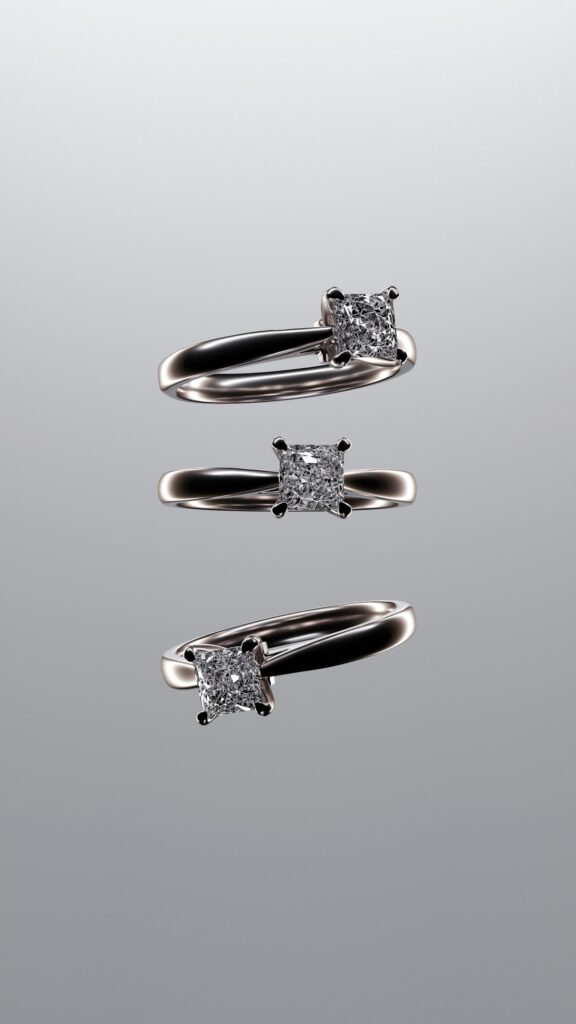
Mociun, the Brooklyn studio founded by Caitlin Mociun in 2007 (originally as a textile and ceramics line, expanding into jewellery a few years later), was the studio doing the most interesting work in alternative engagement and wedding bands in summer 2014. The signature was the unmatched-stone band — a pale blue sapphire alongside a champagne diamond, both held in slightly off-axis settings, the combination chosen to look intentional rather than accidental. The work was being commissioned for actual weddings in the New York creative-class set throughout 2014, and the quiet word-of-mouth made the studio one of the most-recommended independent-jewellery destinations of the year.
Loren Stewart kept its workhorse position
Loren Stewart, the LA studio we covered in the winter 2013 jewellery roundup, kept its position through summer 2014 as the editorial reference for plain solid-gold bands. The Cigar Band, the Wide Band, the simple thin stacking band — all kept their reorder cadence, and the studio’s under-five-hundred-dollar price discipline meant the work continued to sit at the right place in the market for serious-but-not-extraordinary gifts. The studio’s wedding-band offering was getting more competitive against the bridal-specialist studios, and several of our friends had committed to a Loren Stewart band for a wedding in late 2014.
The discovery problem was finally solved
The thing that had been holding back independent jewellery in the US for years had not been the work — there had always been excellent small-batch makers — but the discovery problem. Finding the right small studio meant subscribing to specific magazines, knowing the right boutique, asking the right friend. By summer 2014 that problem was effectively solved. Instagram had become the primary discovery channel for the category, the maker-tagging culture was robust, and the editorial coverage in Into the Gloss and the major fashion magazines had mapped the landscape clearly enough that anyone willing to spend an hour scrolling could find the right small studio for their taste and budget.
We will see you for the next jewellery roundup at the end of the year. The December gift-buying conversation is going to push us toward a fresh set of names; the engagement-ring season that follows will bring back the bridal-specific studios. Between now and then, expect at least one of the names above to launch a wider distribution deal.
Frequently asked questions
What were the main summer 2014 jewellery themes?
This round-up covers Wwake redefined the delicate-fine category, Maya Brenner made the alphabet pendant a category, Ariel Gordon took the chain-and-charm lane, Mociun broke the unmatched-stone wedding-band rules and Loren Stewart kept its workhorse position.
Are summer 2014 jewellery styles still worth wearing?
Independent jewellery ages well. The stones, shapes and stacking ideas here still read modern, and many of the makers are still selling – which is why the piece is worth revisiting rather than archiving.
Who writes these seasonal round-ups?
Natalia, the editor behind Tried & Tested Beauty. Every seasonal round-up is written by the same editorial team that writes our product reviews, from shows, look books and pieces we followed at the time.
How does Tried & Tested Beauty pick what goes in a jewellery round-up?
We choose the looks and makers that had staying power rather than the loudest moment of the season – the pieces we would still recommend, and the ones that kept turning up afterwards.