
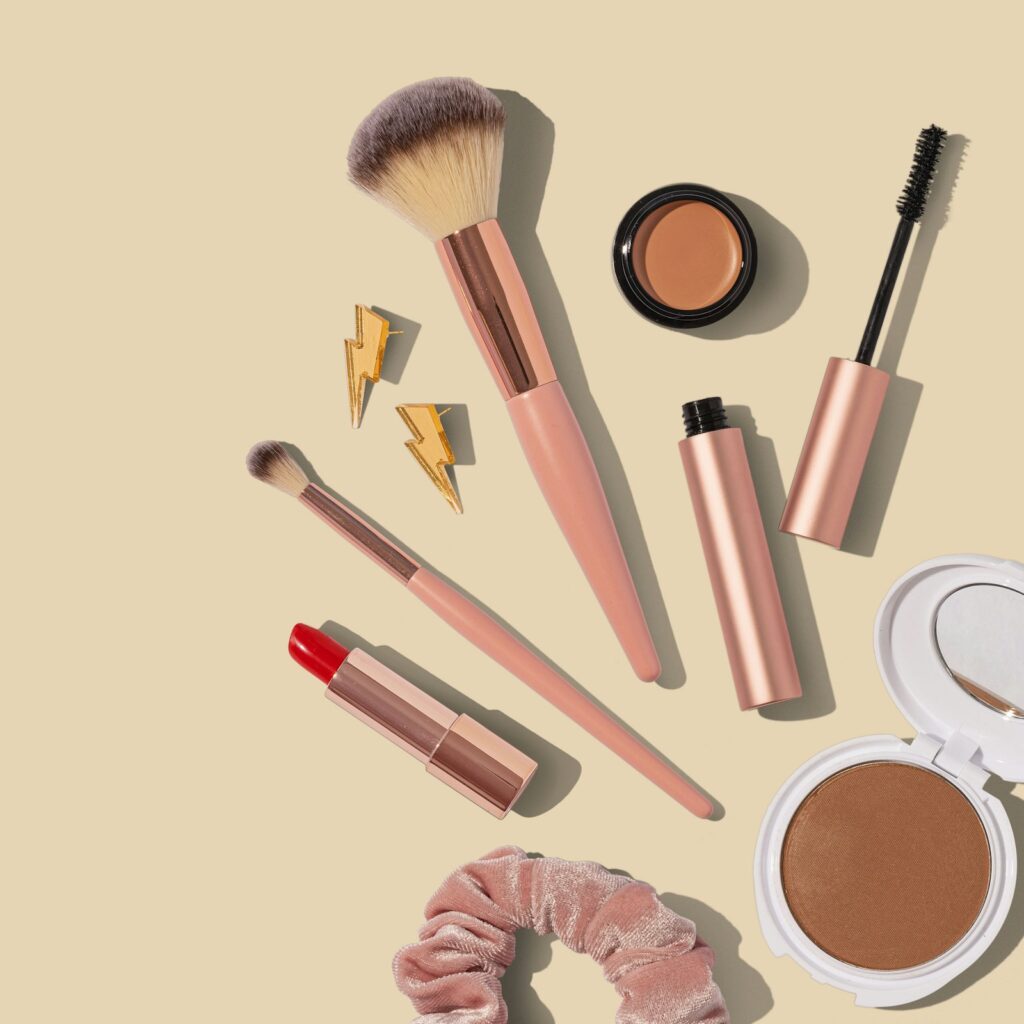
June arrived heavy. We had spent late May glued to news from Minneapolis, then to footage and statements rolling out from every corner of the industry, and the bathroom counter — the place where this blog usually starts — felt almost beside the point. We kept showing up to it anyway, because routine became a coping mechanism for a lot of us this spring, and because the conversation about what beauty means, who it serves, and who profits from it suddenly stopped being a conversation and started being a reckoning. June 2020 was a strange month to write about lipstick, and we are not pretending otherwise. What we did instead was try to pay closer attention: to the brands speaking up, the brands staying conspicuously silent, and to the small daily rituals that, for many of us, were the only way to mark the passage of time.
A reckoning the industry could not skip
The defining beauty story of the month was not a launch. It was a movement. Aurora James, the designer behind Brother Vellies, posted a challenge to American retailers at the end of May asking them to dedicate fifteen percent of their shelf space to Black-owned businesses. By the first week of June it had a name and a website at the 15 Percent Pledge, and Sephora was the first major retailer to sign on. Around the same time, Sharon Chuter — the founder of UOMA Beauty — launched Pull Up for Change, asking every brand that posted a black square on Instagram to also post the percentage of Black employees on their corporate teams. The numbers, when they came, were brutal in their flatness. We spent a lot of time this month moving Black-owned beauty into the front of our mental shopping list: Pat McGrath Labs, Fenty Beauty, Mented Cosmetics, The Lip Bar, and Bevel. June felt like a month for putting our money where our values had been claiming to live.
Skincare kept doing the heavy lifting
Three months into staying home most days, our skin had opinions. Mask wearing had introduced a new word — maskne — to anyone who had not previously had to think about the friction zone where a cotton mask meets a chin. We rotated in Paula’s Choice 2% BHA Liquid for the breakouts and La Roche-Posay Cicaplast Baume B5 for the irritated patches that came right after, and that became the routine. The bigger picture trend was that everything we used to outsource — facials, peels, brow appointments — got reframed as a project at the bathroom sink. Drunk Elephant kept showing up in our medicine cabinet, with the C-Firma Fresh Day Serum getting most of the credit for whatever brightness our complexions still claimed to have. Niacinamide went from “ingredient on the back of the bottle” to “ingredient we name out loud” — the version from The Ordinary sat next to a thousand bathroom sinks in June, and at ten dollars a bottle it was the closest thing prestige skincare had to a default.
Hands as the new face
One of the smaller, sweeter shifts of the year so far was that hand cream had been promoted from afterthought to centerpiece. Three months of frequent washing and constant sanitizer had left a lot of us with hands that looked older than the rest of us, and the category responded. Necessaire, the body-care brand from Randi Christiansen and Nick Axelrod, had launched its Hand Cream earlier in the year and turned out to have stunningly good timing. Aesop Resurrection Aromatique Hand Balm went into our bag for the rare grocery run. Even the drugstore aisle had its moment — Eucerin Advanced Repair was suddenly the unglamorous workhorse worth keeping by the kitchen sink. It was a small category having a big moment, and it stuck around because the underlying problem — washing our hands more than we ever used to — was not going to go away.
Hair colour took an at-home detour
Salons in most US cities were either closed or operating at restricted capacity through May and into June, and the pent-up energy went straight to the box-dye aisle. Some of us made it work; some of us learned that the warm tone we wanted in the chair turned brassy in the kitchen. L’Oréal Paris Excellence Crème quietly became the responsible default for grey coverage. The DTC players — Madison Reed in particular — saw their wait lists balloon, and Madison Reed’s Root Touch Up became a rite of passage for anyone whose roots had outpaced their patience. For everyone trying not to undo their bond integrity in the process, Olaplex No. 3 Hair Perfector was the bottle staring back from the shower shelf. And for the brave, who chose this moment to dye their entire heads pink — we saluted you from a respectful distance.
Fragrance got quieter, and we got more particular
With most of us not leaving the house, fragrance became less of a “going out” purchase and more of a way to mark the difference between morning and night when nothing else was. The category that did especially well in this odd window was the comforting, single-note, almost utilitarian — Le Labo Santal 33 stayed on the dresser, and Maison Louis Marie‘s No. 04 Bois de Balincourt became the under-fifty-dollar gift that everyone seemed to be sending each other through the spring. Candles meanwhile became the only fragrance we wore in any meaningful sense; Boy Smells Kush and Diptyque Baies kept the apartment from smelling exclusively of dish soap.
July is going to be its own thing. Fenty teased a skincare line for the end of the month, which would make it Rihanna’s third LVMH-backed venture in three years and the first prestige skincare line from a Black woman to launch at this scale. We are watching that closely, and we are still trying to take our cues, in a small way, from the conversation that took shape in June. We will see you on the first Tuesday of July.
Shop the edit
- e.l.f. Stay All Night Setting Spray — keeps summer makeup in place through the heat.
- Supergoop! Glow Stick SPF 50 — easy on-the-go SPF reapplication.
- Color Wow Dream Coat — anti-humidity protection for summer hair.
- Sol de Janeiro Cheirosa 62 Mist — a warm-weather scent layer.
As an Amazon Associate, Tried & Tested Beauty earns from qualifying purchases. The links above are affiliate links.
You might also like
Frequently asked questions
What were the main beauty topics covered in June 2020?
Our June 2020 edit looked at: A reckoning the industry could not skip, Skincare kept doing the heavy lifting, and Hands as the new face. Read each in full above.
Are the June 2020 products still available?
Most are still sold by their original brands; a few have been reformulated. Each section above links to where to buy, with updated alternatives noted where the original is gone.
Who tests the products in Tried & Tested Beauty’s monthly edits?
Natalia and the Tried & Tested Beauty editorial team. We have been writing this blog since 2011 and only feature products we have tested ourselves or assessed against credible reviewer reports.
How do you choose what to include in a monthly beauty roundup?
Each entry must be either a notable launch, a viral product we tested, or a returning favourite. We do not feature anything we have not tried or vetted against trusted reviews.