
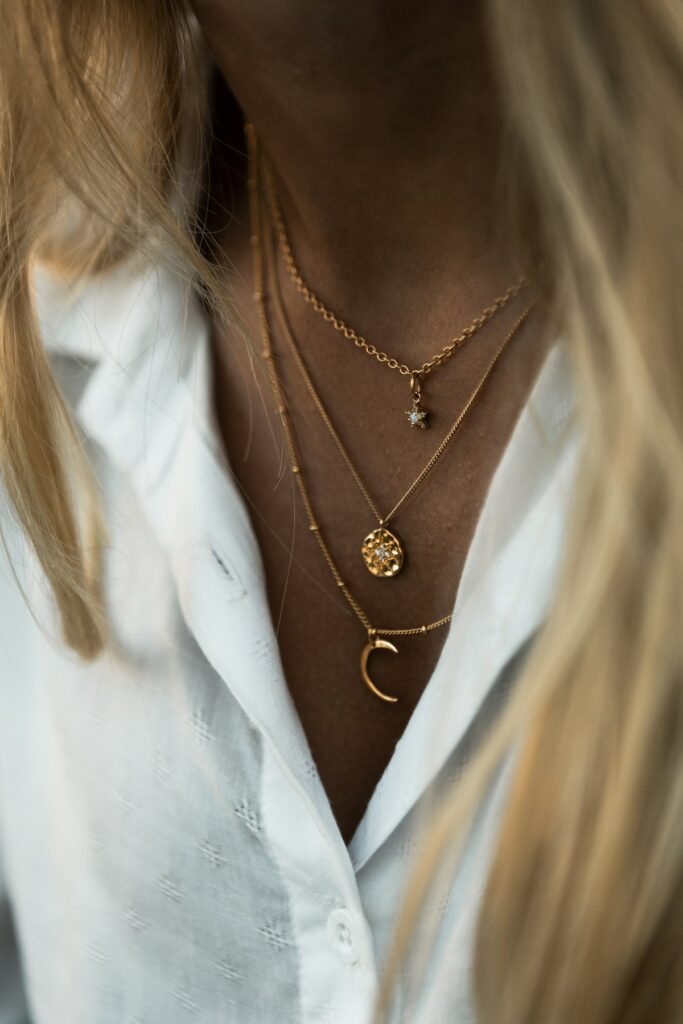
December is the loudest month of the year for independent jewellery, for two simple and overlapping reasons. The first is gifting season — small-batch jewellery sits in exactly the right price range and weight class for a thoughtful December gift to a partner, sister, or close friend. The second is engagement-ring season — the largest share of US engagements happen between Thanksgiving and Valentine’s Day, and the conversation about who is making the rings actually being chosen has been quietly migrating away from chain-store mall jewellers toward independent studios for a few years. By the third Tuesday of December 2013 our wishlists had a heavy small-studio bias, and the holiday-gift conversation among our friends had become almost a directory of US independent jewellers. Below, the makers we kept coming back to as the year closed.
Anna Sheffield made independent bridal a category
The independent-bridal conversation in late 2013 was effectively shaped by Anna Sheffield. Her studio had grown out of the Bing Bang line in the early 2000s and had reached the point in 2013 where its bridal collection was the editorial reference for anyone who wanted an engagement ring that did not look like everyone else’s. The signature was the Hazeline solitaire — a centred old-cut diamond on a thin pinched band, the band slightly hand-textured, the prongs deliberately not perfectly symmetrical — a ring that read antique without actually being antique. By December 2013 it had become one of the most-screenshotted ring shapes on Pinterest, and the studio had a months-long waitlist for custom commissions.
What made Anna Sheffield’s 2013 moment matter was not just the work — it was the proof that you could build a real independent jewellery brand in the United States by going through editorial press and word-of-mouth without a chain-store distribution deal. Every bridal-leaning small studio that opened in the next five years borrowed parts of her template.
Loren Stewart owned the simple stacking ring
Loren Stewart, the LA-based studio founded by Loren Stewart Wilkes, had been quietly producing some of the cleanest and best-priced fine-jewellery basics in the US since 2009. The studio’s plain solid-gold bands — wide and skinny, polished and matte, in 14- and 18-karat — were the editorial reference for anyone building a stack that would actually last. The signature piece for our friend group in late 2013 was the Cigar Band, a wider 14-karat gold band that looked beautiful on its own and stacked just as well with a thinner band layered above or below it.
What made Loren Stewart particularly relevant in December 2013 was the price point. The studio’s plain bands sat at the right place — under five hundred dollars for solid 14-karat — that they read as serious gifts without crossing into the territory of a heirloom-marriage commitment. Three women in our orbit gave or received a Loren Stewart band as a Christmas gift that year.
Erica Weiner brought antique-inspired pieces back
The antique-inspired side of US independent jewellery in 2013 was meaningfully shaped by Erica Weiner, the New York studio that had built its reputation on faithful Victorian and Edwardian reproductions sold alongside actual estate-sourced antique pieces. The studio’s Lower East Side and Brooklyn shops were a constant editorial reference for a particular New York creative-class woman who wanted jewellery that looked like it had been inherited but did not have to be. The piece that landed hardest in late 2013 was a hand-engraved acorn pendant in solid yellow gold, the kind of small specific thing that read warmer and more personal than any chain-store equivalent at twice the price.
The other Erica Weiner specialty was the genuinely antique piece — a Victorian mourning brooch, a 1920s art-deco bar pin, the occasional turn-of-the-century engagement ring — sourced through estate sales and curated tightly. December 2013 was a particularly strong month for the studio because the antique-pieces collection turned over fast in the gift-buying window.
Vanessa Mooney made the case for the bohemian heirloom
Vanessa Mooney’s LA studio had been producing a different register of independent jewellery since the late 2000s — bohemian, layered, often turquoise- or feather- or fringe-leaning, with a heavy California-festival aesthetic that had crossed into national editorial coverage by 2013. The studio’s Astrid Knife pendant in oxidised silver was the most-photographed piece across our friend group’s end-of-year Instagram, and the small bracelet stacks Vanessa Mooney sold in three- and four-piece sets were the under-a-hundred-fifty-dollar gift answer for anyone who wanted to send something visibly handmade and visibly American.
What made Vanessa Mooney’s 2013 moment matter was the price discipline. The studio held a price-to-quality ratio that more or less did not exist elsewhere in the bohemian-jewellery category, and you could actually give the work as a gift to a niece or younger sister without flinching at the receipt.
Page Sargisson held the small-Brooklyn-studio line
The other small Brooklyn studio that mattered for end-of-year giving in 2013 was Page Sargisson, a recycled-gold and ethically-sourced-stone studio that had been operating out of Greenpoint since 2006. The work was hand-fabricated, the casting was done in small batches at independent foundries, and the studio’s commitment to ethically sourced materials was a meaningful selling point for a particular kind of December 2013 buyer who had started caring about provenance in fine jewellery the way they had recently started caring about provenance in coffee.
The piece we kept reaching for as a gift recommendation was a simple recycled-gold thread-thin band with a single bead set on top — under three hundred dollars, deeply personal as a gift, the kind of jewellery a recipient was going to actually wear into the next decade.
Why this all mattered as 2013 closed
The independent-jewellery moment that had been building all year resolved in December into a real shift in how a particular slice of the US gift-buying market thought about fine jewellery. The argument was simple — better materials at better prices, better stories behind the maker, pieces that were not going to show up on six other women in the same room — and by late 2013 the argument had real product behind it. The chain-store mall-jewellery model had not collapsed, but its position as the default for serious gift-buying had clearly weakened, and the small studios above were a meaningful part of why.
We will see you for the next jewellery roundup in early summer 2014. Between now and then, we expect to see at least one of these names launch a wider distribution deal, and at least one new small studio break into the same conversation. Happy New Year.
Frequently asked questions
What were the main winter 2013 jewellery themes?
This round-up covers Anna Sheffield made independent bridal a category, Loren Stewart owned the simple stacking ring, Erica Weiner brought antique-inspired pieces back, Vanessa Mooney made the case for the bohemian heirloom and Page Sargisson held the small-Brooklyn-studio line.
Are winter 2013 jewellery styles still worth wearing?
Independent jewellery ages well. The stones, shapes and stacking ideas here still read modern, and many of the makers are still selling – which is why the piece is worth revisiting rather than archiving.
Who writes these seasonal round-ups?
Natalia, the editor behind Tried & Tested Beauty. Every seasonal round-up is written by the same editorial team that writes our product reviews, from shows, look books and pieces we followed at the time.
How does Tried & Tested Beauty pick what goes in a jewellery round-up?
We choose the looks and makers that had staying power rather than the loudest moment of the season – the pieces we would still recommend, and the ones that kept turning up afterwards.