
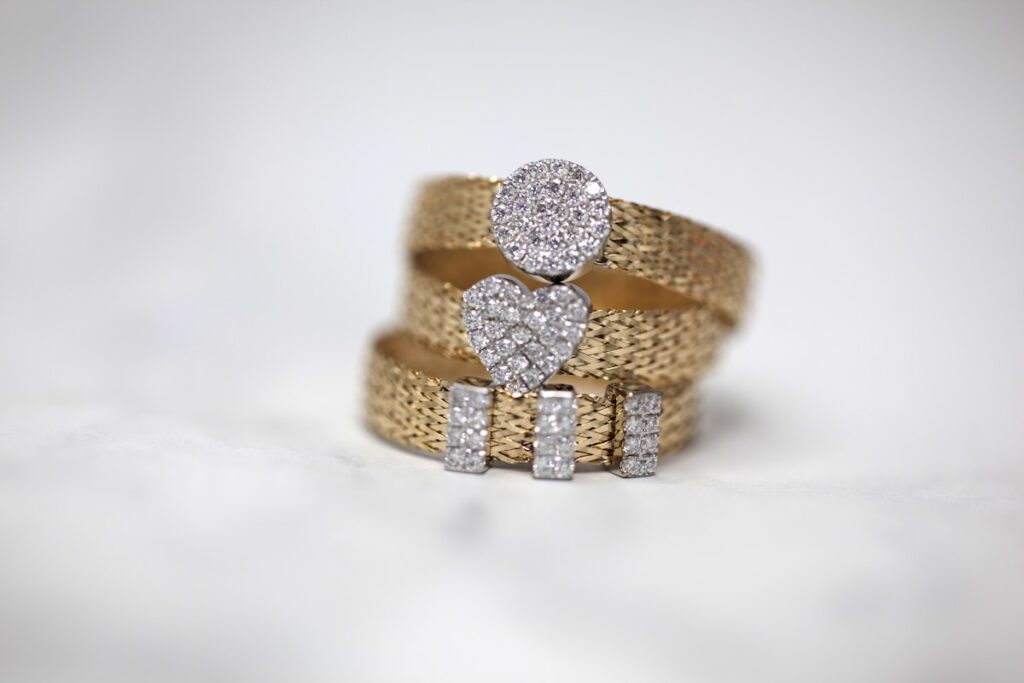
Independent jewellery is one of those quiet categories where the most interesting work in the US is being done by people you have never heard of, in studios that exist on a single Brooklyn block, on benches that look more like ceramics workshops than retail operations. The mid-2010s were a particularly rich moment for the category: small-batch makers were finally finding national audiences through Instagram and through the editorial coverage that came with it, and a generation of designers who had spent the previous decade in apprenticeship were releasing their first standalone collections. Below, the independent jewellery names we kept coming back to in summer 2013 — the ones whose work was on our wrists, on our friends’ ears, and in the wedding-ring conversations that were quietly displacing the chain-store norm.
Catbird made the case for the small Brooklyn studio
If there was one independent jeweller who set the tone for the rest of the decade in US small-batch fine jewellery, it was Catbird. The Brooklyn studio had opened in 2004 and had built its reputation on tiny, delicate, almost-imperceptibly-fine pieces — a 14-karat-gold band thinner than a strand of dental floss, a stud earring smaller than a grain of rice, a stacked-ring philosophy that quietly produced the most copied wedding-ring concept of the year. By summer 2013 the brand was operating its own retail shop in Brooklyn, was being editorialized in every monthly New York magazine column about jewellery, and was producing about half its inventory in-house under the supervision of the bench team.
The piece every editor we knew owned was the Threadbare Ring — a 14-karat-gold band with a tiny diamond chip, designed to stack with two or three more, sold under a hundred dollars in its plain version. The piece every bride in our orbit was secretly considering was a hand-fabricated wedding band stacked with a thin engagement band by the same studio. The wedding-ring conversation in our friend group had genuinely shifted away from chain-store choices toward Catbird in 2013, and the studio was a meaningful part of the reason that shift was happening.
Pamela Love brought a darker line
Where Catbird lived in the bare-essentials minimalism camp, Pamela Love was the louder, more sculptural, more talisman-leaning answer. The brand had been around since 2007 and had reached a creative peak in 2013 — pieces with arrowheads, talons, hexagons, the occasional cabochon turquoise. The signature was the spike: small spike studs, a longer spike pendant on a fine chain, the spike-stack ring that turned a casual handshake into a small statement.
The Pamela Love piece that landed hardest in summer 2013 was the small Tribal Spike Stud earring in oxidised sterling silver — a single conical spike, less than half an inch long, that read more architectural than gothic. We bought a pair as a wedding gift in mid-June and the bride wore them at the rehearsal dinner.
Lizzie Fortunato walked the editorial-statement line
The sister-run studio of Lizzie Fortunato, founded in 2008 by twins Kathryn and Lizzie Fortunato in New York, was the editorial-fashion-statement specialist. Their pieces did not pretend to be everyday jewellery. They were sculptural, often resin-and-metal, sometimes incorporating textiles or unusual stones, and they read more like wearable sculpture than like fine jewellery. The brand had been a fashion-magazine darling for years, but summer 2013 was the moment the studio felt like it had broken out of editorial-only territory and into the actual jewellery boxes of the people who read those magazines.
The piece we coveted hardest in summer 2013 was a long resin-and-brass tassel earring in a sapphire blue, the kind of statement piece that resolves an entire outfit at a wedding without anyone needing to ask what you are wearing. They were not under a hundred dollars. They were not the kind of jewellery you wore every day. They were special, and that was the point.
Jennifer Fisher made the gold hoop a category
The gold hoop earring had been around forever, but Jennifer Fisher’s line had quietly redefined what a serious version of one looked like. The brand’s signature Drew Hoop in solid yellow gold — at every size from tiny baby-hoop to the genuinely-large four-inch version — was the editor reference for anyone who wanted a hoop that read prestige rather than costume. Fisher had started the line after her own pregnancy in 2005, and by 2013 the brand was being stocked at Barneys, the studio was producing across multiple collection lines, and the founder had become a quiet authority on what a working New York mother of an under-five-year-old should wear in jewellery.
The summer 2013 piece we kept seeing was the personalized-letter pendant on a fine yellow-gold chain. The advice that everyone gave at the same time was to order it in 14-karat rather than 18 to keep the price reasonable, to pick a single initial rather than multiple, and to wear it on a longer chain than the brand showed in its own marketing imagery so the pendant landed at the sternum rather than the collarbone.
Miansai gave the men’s jewellery conversation a starting point
The men’s independent jewellery category had been thin in the US for years; Miansai was the brand most often credited with changing that. Founded in Miami in 2008 and growing out of a sailing-rope cuff that had become a New York street-style staple, by summer 2013 Miansai had a flagship store in SoHo, a full collection of leather and metal cuffs, and the kind of crossover unisex appeal that meant women in our orbit were wearing the brand as often as men were. The Anchor Cuff in brushed silver with a black leather wrap was the piece every working creative man in our friend group seemed to be wearing that summer.
The case for buying small in the first place
The conversation underneath all of this — the reason the independent-jewellery category was finally getting real US visibility in summer 2013 — was a quiet displacement of the chain-store mall jewellery model that had dominated the previous two decades. Independent makers offered better materials at the same price point (solid 14-karat versus plated brass), better stories (you could often meet the maker), and pieces that did not show up on six other people in the same room. The trade-off was that you needed to know where to look. By summer 2013, the editorial coverage had matured to the point where finding small-batch makers was finally easy, and the discovery problem that had kept the category niche for years was effectively solved.
We will see you for the next jewellery roundup at the end of the year, when the December gift-buying season will probably push us toward another set of small studios — though we suspect at least one of these names will land in that conversation again.
Frequently asked questions
What were the main summer 2013 jewellery themes?
This round-up covers Catbird made the case for the small Brooklyn studio, Pamela Love brought a darker line, Lizzie Fortunato walked the editorial-statement line, Jennifer Fisher made the gold hoop a category and Miansai gave the men’s jewellery conversation a starting point.
Are summer 2013 jewellery styles still worth wearing?
Independent jewellery ages well. The stones, shapes and stacking ideas here still read modern, and many of the makers are still selling – which is why the piece is worth revisiting rather than archiving.
Who writes these seasonal round-ups?
Natalia, the editor behind Tried & Tested Beauty. Every seasonal round-up is written by the same editorial team that writes our product reviews, from shows, look books and pieces we followed at the time.
How does Tried & Tested Beauty pick what goes in a jewellery round-up?
We choose the looks and makers that had staying power rather than the loudest moment of the season – the pieces we would still recommend, and the ones that kept turning up afterwards.